

Energy, Power Generation & Utility Flooring Systems
Turbine oil and outage rigging in the hall; regeneration acid and caustic in the water treatment room; electrolyte and static control in the battery room; methanol and hot process water on the biofuel side. Maverick engineers floors, containment, and linings for natural gas, coal-fired, combined-cycle, hydroelectric, nuclear, and cogeneration plants, electrical substations and utility maintenance facilities, and biofuel, ethanol, and biodiesel production.
One Plant, Six Different Floors
A generating station is not one application. The turbine hall takes point loads and oil; the demineralizer room takes regeneration acid and caustic; the battery room takes electrolyte and a static-control spec; the shop takes everything. Each room gets its own build, and the build changes with the condition of the slab under it.
Heavy-traffic floors typically start from a ¼″ troweled epoxy mortar body. Chemical rooms add a novolac topcoat and monolithic coved berms — see chemical-resistant linings and secondary containment. Hot, wet biofuel process floors move to urethane cement. Electrical rooms, control houses, and shops step down to coatings sized to the traffic and the slab.
Turbine Halls & Generator Floors
Turbine oil, lube drips, crane rigging, and outage laydown where the heavy parts land. A troweled epoxy mortar body with the control joints filled, built to be driven on and dropped on between outages, over a slab that has usually been oil-soaked for decades and has to be prepped to sound, clean concrete first.
Water Treatment & Chemical Rooms
Demineralizer regeneration acid and caustic, boiler feedwater chemistry, hypochlorite at the cooling side. Mortar body, novolac topcoat, monolithic coved secondary containment at the bulk tanks, and lined neutralization sumps and tanks.
Battery, UPS & Electrical Rooms
Electrolyte at the racks, static control where the spec calls for it, and cable trays that cannot be moved. MavCoat ESD where static dissipation is specified; a novolac system with a coved curb where battery electrolyte containment governs.
Maintenance Shops & Vehicle Bays
Oils, fuels, hot tires, dropped tooling, and the service trucks backing in. Impact-resistant high-build epoxy or quartz broadcast with the control joints filled so the forklift stops chipping them.
Biofuel, Ethanol & Biodiesel Process Areas
Methanol, caustic, acid catalyst, fermentation organic acids, and hot process water in the same building. Urethane cement for the thermal shock, a novolac topcoat for the chemistry, and lined containment and tank linings at the process and storage tanks.
Substations & Utility Yard Buildings
Control houses, relay rooms, and utility maintenance buildings: condensation, dust control, light traffic, and slabs that were poured without a vapor retarder. Self-leveling or high-build epoxy over a moisture-tolerant primer, with the slab tested before the primer is chosen.
| Zone | Primary Exposure | Typical Starting Point | Nominal Thickness |
|---|---|---|---|
| Turbine Halls & Generator Floors | Turbine and lube oil, point loads, outage rigging and laydown | MavClad EM epoxy mortar; MavJoint JF at control joints | ¼″ |
| Water Treatment & Chemical Rooms | Sulfuric acid, caustic, hypochlorite, feedwater chemistry; bulk tank spills | MavClad EM with MavCoat NV novolac topcoat; coved containment berms and lined sumps | ¼″ |
| Battery, UPS & Electrical Rooms | Battery electrolyte, static control, fixed equipment, cleanability | MavCoat ESD where static control is specified; MavCoat NV where electrolyte containment governs | — |
| Maintenance Shops & Vehicle Bays | Oils, fuels, impact, hot tires, truck traffic | MavCoat HB epoxy or MavTop UQ-HD quartz; MavJoint JF at control joints | — |
| Biofuel, Ethanol & Biodiesel Process Areas | Methanol, caustic, acids, organic acids, hot process water, thermal shock | MavCrete UM urethane cement with MavCoat NV topcoat; lined containment | ¼″ |
| Substations & Utility Yard Buildings | Condensation, dust, light traffic, slab moisture | MavCoat SLE or HB epoxy over MavPrime MVT; moisture mitigation where the slab tests for it | — |
Starting points, not prescriptions. Every Maverick system is engineered to the condition of the substrate, the abuse it takes, and the facility’s history with previous floors — the build changes from room to room and plant to plant. Only new construction over bare concrete comes close to a standard build.
Containment, sumps, and tank linings are part of the work. Chemical exposure is assessed per facility — which chemistry, at what temperature, for how long it sits — and the resin is matched to it from the chemical-resistance chart on each product data sheet. Deteriorated concrete is removed to sound substrate; curbs, berms, and equipment pads with section loss are rebuilt before anything is coated; coves, curbs, sumps, trenches, and pipe penetrations are detailed monolithically. Neutralization and regeneration tank linings, acid and caustic bulk-storage containment, and lined sumps and trenches are Maverick work. Static-control floors use MavCoat ESD static-dissipative urethane floor coating applied over an epoxy insulator coat and grounded to the building — surface resistance, point to point/ground, 1×10^5 to <1×10^9 ohms per ANSI/ESD STM 7.1 — for electrical assembly, circuit-board handling, avionics areas, static-sensitive manufacturing and packaging, clean rooms, and labs Nuclear plants are in scope beyond the turbine hall — auxiliary, radwaste, and support building floors, warehouses, and shops — performed under the owner’s site access, security, and radiological protection program.
Facilities We Serve
- Nuclear power plants
- Natural gas power plants
- Coal-fired power plants
- Hydroelectric power plants
- Combined-cycle power plants
- Cogeneration facilities
- Turbine manufacturing
- Electrical substations
- Utility maintenance facilities
- Biofuel production
- Ethanol manufacturing
- Biodiesel processing
- Renewable energy storage facilities
- Waste-to-energy plants
The Systems This Work Demands
MavClad EM Epoxy Mortar
¼″ troweled, chemically resistant — the heavy-duty body for turbine halls and chemical rooms.
Explore the SystemEpoxy Systems
MavClad, MavCoat, and MavPrime — novolac, static-dissipative, high-build, and self-leveling coatings sized to each room.
Explore the SystemRepair & Slope Restoration
MavPatch, MavRapidPatch, and MavGrout USP — the substrate rebuilt before the system goes down.
Explore the SystemMechanical Room Work, Photographed On Site
A boiler room floor rebuilt around in-service equipment — concrete removed to sound substrate, slope restored to the drains, equipment pads rebuilt, and the system installed in a live mechanical space. Maverick batches its own products in its own plants and installs them with its own crews, so one company owns the chemistry, the installation, and the single-source warranty.
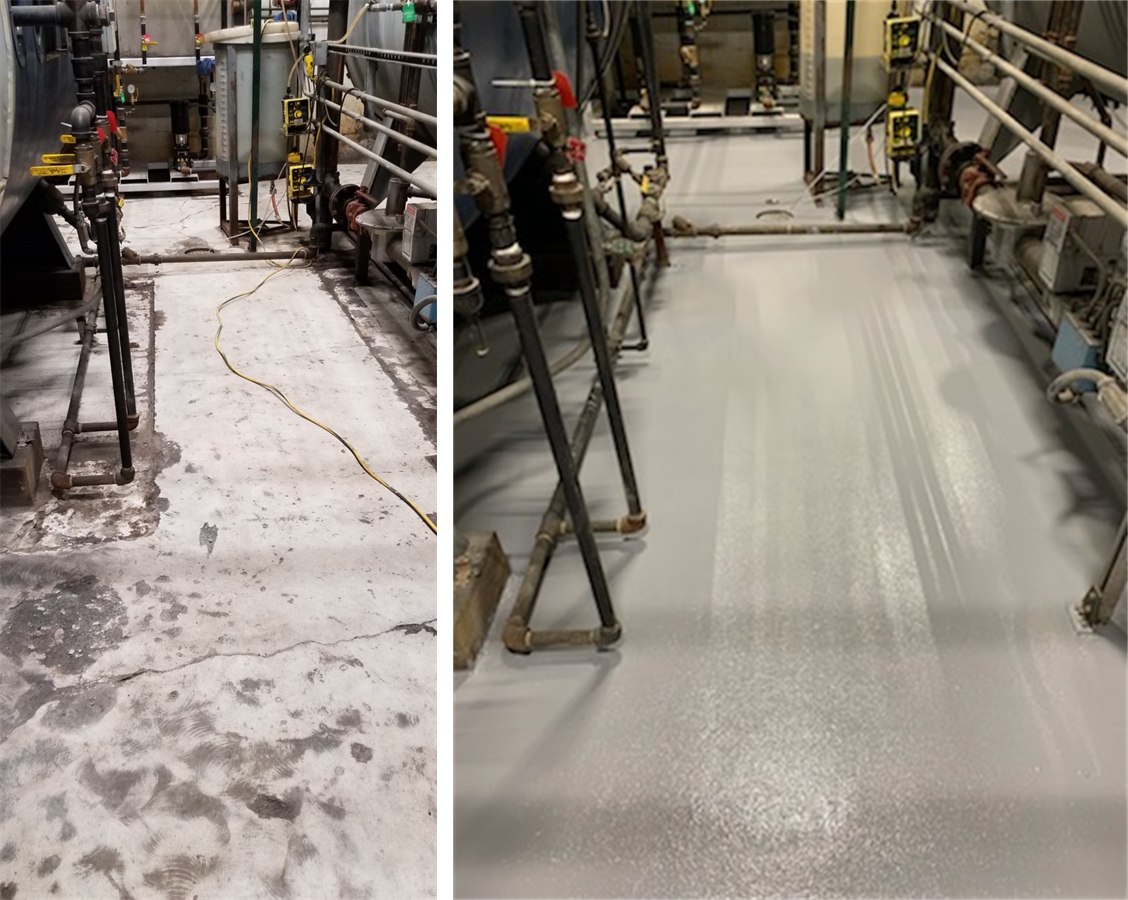
Boiler room — floor rebuilt and coated around in-service equipment
Specify It Once, Correctly
The Architect Center carries the full standard detail library, isometric system shop drawings, and CSI 3-part specifications under Section 09 67 23 Resinous Flooring.
Straight Answers Before You Call
Can you install during a planned outage window?
Yes. The work is phased by room, around equipment that cannot move, and the floor is sequenced to the outage schedule rather than the other way around. Where a room has to return to service quickly, fast-cure options such as MavSeal UPA Fast Cure, MavCoat FC basecoat, MavRapidPatch, and MavPolyPatch shorten the window. Tell us the outage dates and we will engineer the sequence to them.
Do you install static-dissipative floors for battery and control rooms?
Yes, where the specification calls for it. The product is MavCoat ESD static-dissipative urethane floor coating applied over an epoxy insulator coat and grounded to the building — surface resistance, point to point/ground, 1×10^5 to <1×10^9 ohms per ANSI/ESD STM 7.1 — for electrical assembly, circuit-board handling, avionics areas, static-sensitive manufacturing and packaging, clean rooms, and labs The slab is tested and the grounding is laid out before the floor goes down, and the finished floor is read in place. Where electrolyte containment governs instead of static control, the room moves to a novolac system with a coved curb.
What is your scope in a nuclear plant?
Turbine building floors, auxiliary and radwaste building floors, warehouses, maintenance shops, administrative areas, and the containment pads and sumps that go with the plant chemistry. The work is performed under the owner’s site access, security, and radiological protection program, phased to the outage, with crews badged and trained to the site requirements before mobilization.
Which floor goes in an ethanol or biodiesel process area?
The starting point is MavCrete UM cementitious urethane for the hot, wet process floor, with a MavCoat NV novolac topcoat where methanol, caustic, acid catalyst, or fermentation organic acids are present, and monolithic coved containment and tank linings at the process and storage tanks. Urethane cement carries the thermal shock from hot process water and washdown; the novolac carries the chemistry. The build changes with the chemistry in each room, so name it on the drawings and check the chemical-resistance chart on each product data sheet.
Planning This Work?
Outage windows, phasing, live equipment — bring us the constraint and we will engineer the floor around it.